R Programming
R is another powerful programming language for data analytics due to its extensive collection of statistical and graphical methods. It offers a vast array of packages tailored specifically for data manipulation, exploration, visualization, and modeling. Its open-source nature fosters a vibrant community, constantly developing new tools and techniques. Also, and very importantly, R is a programming language geared toward the statistical space, as opposed to Python which leans toward being a general purpose programming language.
The dataset for this project comprises of health-related attributes including glucose level, blood pressure, and BMI, among others. These features are utilized to predict the presence or absence of diabetes in individuals. Employing k-Nearest Neighbors (kNN) analysis, we aim to classify individuals based on their health parameters. Our findings suggests, the analysis yields a model with an accuracy of 80%, indicating the effectiveness of the kNN algorithm in accurately categorizing individuals as diabetic or non-diabetic based on the provided features.
Below is a ROC curve and confusion matrix to better understand the results of this analysis conducted in R Studio.
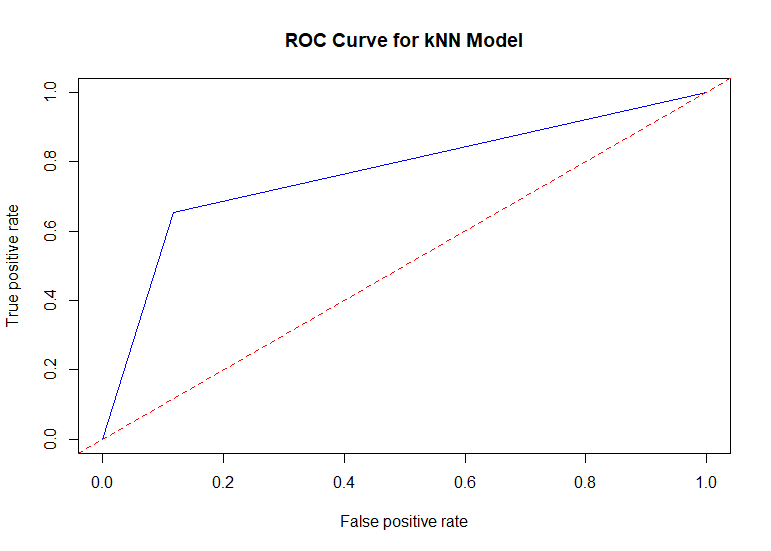
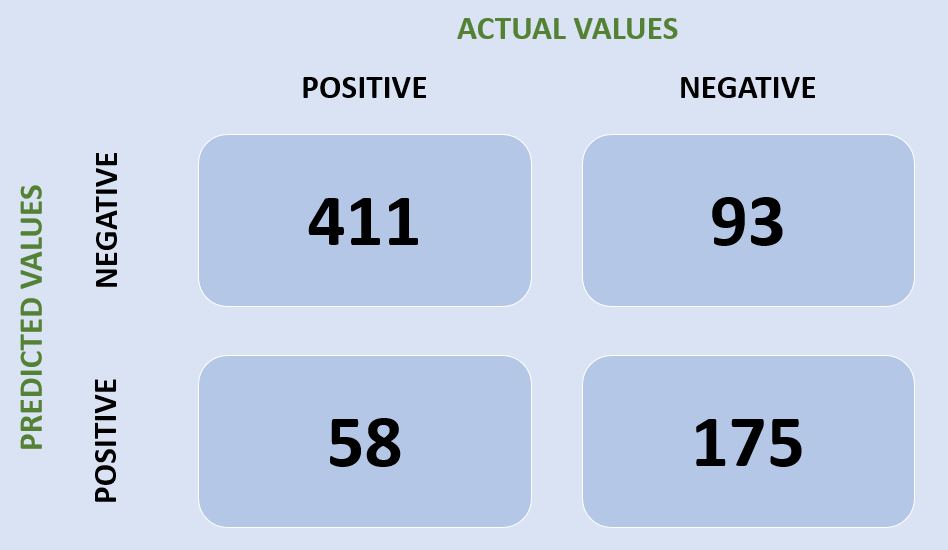
A confusion matrix is like a scorecard that shows how well a model predicts different classes. It compares the actual outcomes (like "yes" or "no") with the predicted outcomes from a model. It helps us see where the model is getting confused. On the other hand, an ROC curve is like a graph that helps us understand how good a model is at distinguishing between two classes. It shows us how well the model can separate the true positives (correctly identified positives) from the false positives (incorrectly identified positives), giving us a clear picture of its performance.
The value of a KNN Analysis
This is a straightforward yet powerful algorithm used in various fields due to its simplicity and versatility. Essentially, it works by classifying a new data point based on the classification of its nearest neighbors. Imagine you're trying to figure out what movie to watch, and you ask your friends for recommendations. If most of them suggest a particular movie, chances are you'll enjoy it too. That's the basic idea behind kNN. It's like tapping into the collective wisdom of the nearest data points to make predictions. Its due to this simplistic approach to prediction that the algorithm finds applications in diverse fields such as healthcare, finance, marketing, and more.